Nicole DiPietro
Co-Founder & Master Blender
Chaga Mushroom: The Complete Guide to the "King of Mushrooms"
In the frozen forests of Siberia, Northern Canada, and Scandinavia, a black, charred-looking growth clings to birch trees. It doesn't look like much—more like a lump of burnt wood than a health supplement. But this unassuming fungus, known as Chaga (Inonotus obliquus), has been used medicinally for centuries and is now one of the most researched functional mushrooms in the world.
Called the "King of Mushrooms" in traditional medicine, Chaga has earned its reputation through an impressive array of bioactive compounds and one of the highest antioxidant concentrations found in any food.
This guide covers what the science actually shows about Chaga's benefits, how it works, who should consider it, and important safety information that many articles overlook.
What Is Chaga?
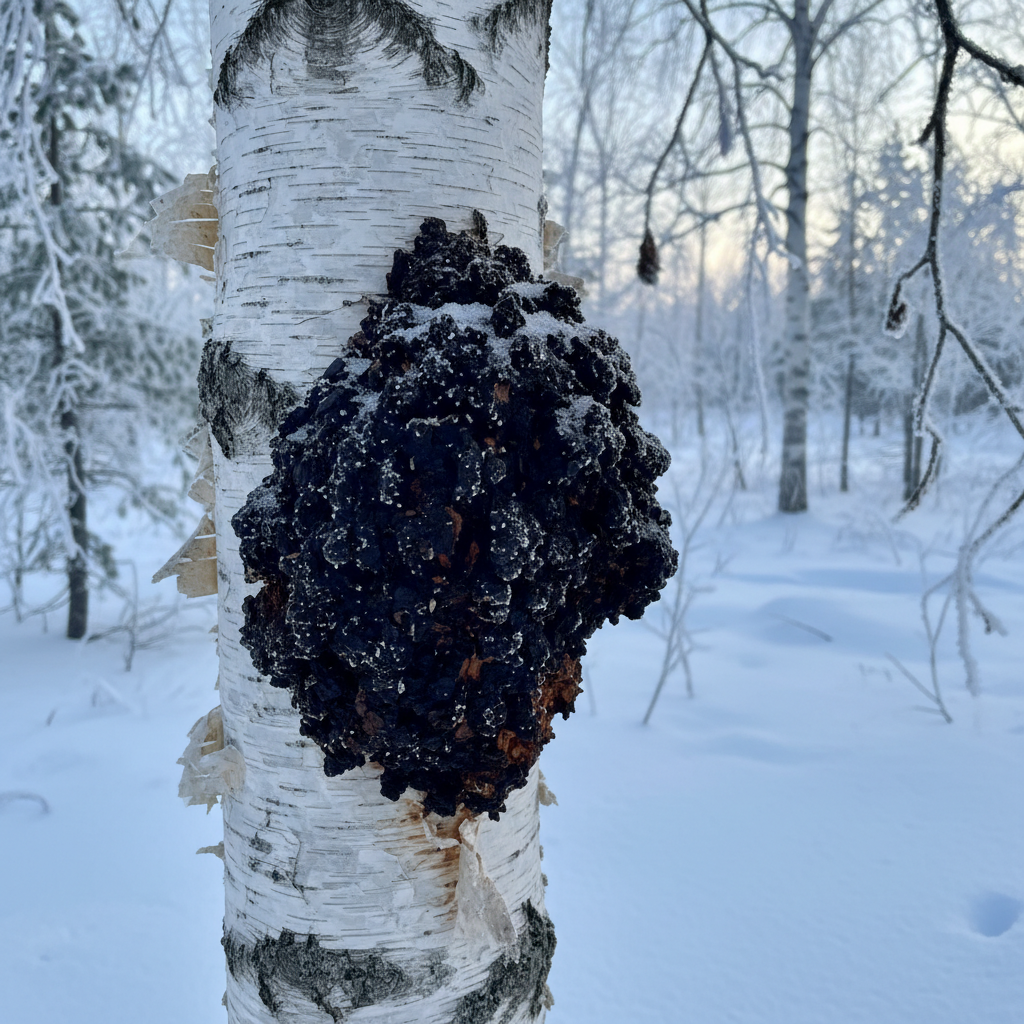
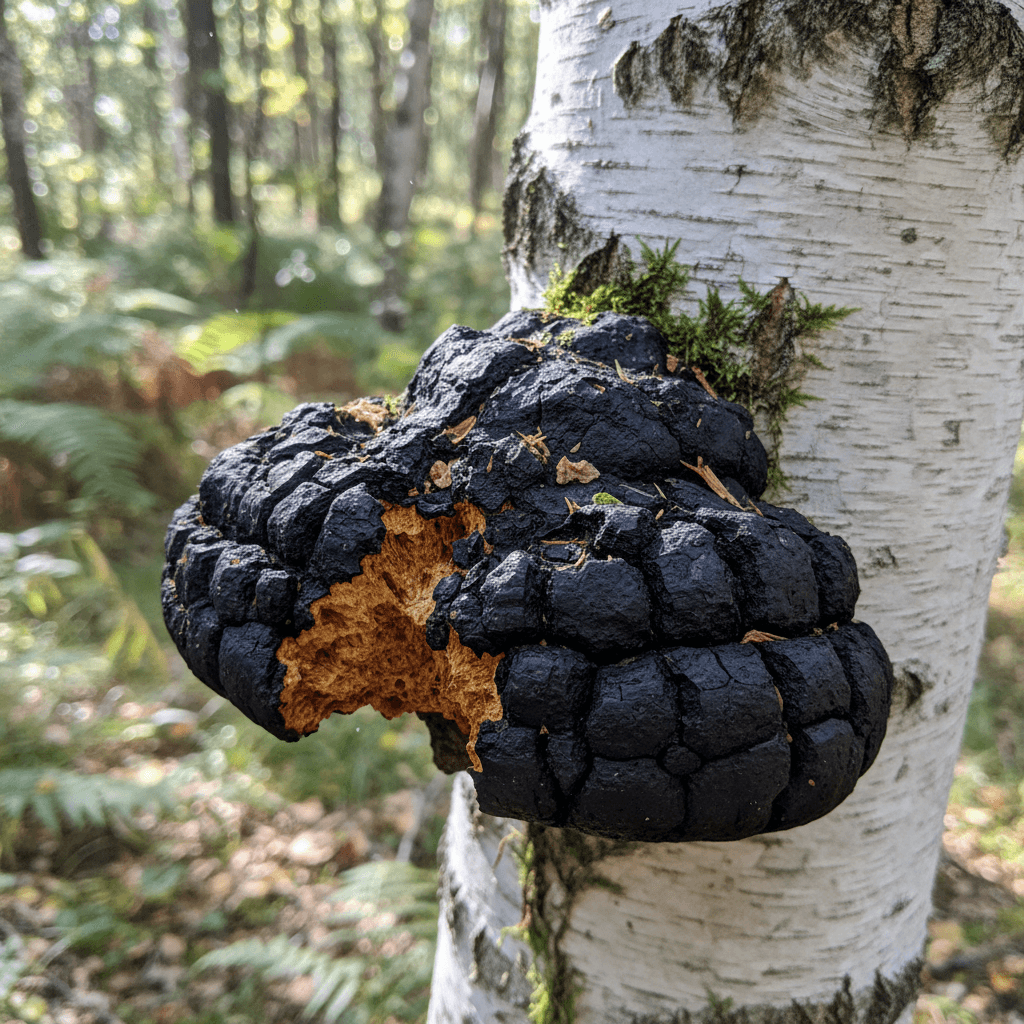
Chaga isn't technically a mushroom in the traditional sense—it's a sclerotium, a hardened mass of fungal mycelium that grows on birch trees in cold climates. It takes 15-20 years to mature and develops a distinctive appearance: black and cracked on the outside (due to high melanin content), orange-brown on the inside.
The fungus has a parasitic relationship with birch trees, slowly extracting nutrients over decades. This relationship is important because many of Chaga's beneficial compounds—particularly betulinic acid—are derived from the birch tree itself. Chaga converts betulin from the birch bark into betulinic acid, which is more bioavailable to humans.
Traditional use of Chaga dates back to at least the 16th century in Russia, Siberia, and Northern Europe, where it was consumed as a tea to treat digestive issues, support immunity, and maintain general health. Finnish people famously used it as a coffee substitute during World War II when imports were cut off.
The Science: Chaga's Key Compounds
Chaga's health benefits stem from a complex array of bioactive compounds:
Beta-Glucans
Like all medicinal mushrooms, Chaga contains beta-glucans—polysaccharides that interact with immune system receptors. Chaga's beta-glucans, specifically (1→3)(1→6)-beta-D-glucans, have been shown to:
- Activate macrophages (immune cells that engulf pathogens)
- Increase cytokine production
- Modulate immune response (both stimulating underactive and calming overactive immunity)
The molecular weight of beta-glucans affects their activity, with higher molecular weight fractions generally providing stronger immune effects.
Antioxidants and ORAC Value
This is where Chaga truly stands out. Chaga has one of the highest ORAC (Oxygen Radical Absorbance Capacity) scores of any food—approximately 140,000 units, which is:
- 3x higher than açai berries
- 40% higher than other medicinal mushrooms
- 25-50x more SOD (superoxide dismutase) antioxidants than CoQ10 or vitamin C
These antioxidants come from multiple compounds including polyphenols, melanin, and triterpenes.
Triterpenes and Betulinic Acid
Chaga contains over 100 triterpene compounds, with betulinic acid being the most studied. Betulinic acid has demonstrated:
- Anti-inflammatory activity
- Potential anti-cancer properties (in cell and animal studies)
- Anti-viral effects
- Blood sugar regulation
Importantly, betulinic acid is only found in Chaga that grows on birch trees—the fungus converts betulin from the birch bark into this more bioavailable form.
Melanin
The black outer layer of Chaga is rich in melanin—the same pigment found in human skin. Chaga melanin has strong antioxidant properties and may help protect against DNA damage from oxidative stress.
Other Notable Compounds
- Polyphenols: Including quercetin, which supports cardiovascular health
- SOD (Superoxide Dismutase): A powerful antioxidant enzyme
- Vitamins and Minerals: B vitamins, vitamin D, potassium, zinc, and more
Research-Backed Benefits of Chaga
Let's examine what the scientific evidence actually shows—and where it's still limited.
Immune System Support
Evidence level: Moderate (animal and cell studies; limited human data)
Chaga's beta-glucans interact with immune receptors including Dectin-1, complement receptor 3 (CR3), and toll-like receptors (TLRs). This activation leads to:
- Enhanced macrophage function
- Increased production of beneficial cytokines
- Reduced production of inflammatory cytokines like TNF-alpha
Studies show Chaga has immunomodulating effects—meaning it can both stimulate an underperforming immune system and help calm an overactive one. This is different from simple "immune boosting" and may be more beneficial for maintaining immune balance.
Antioxidant and Anti-Inflammatory Effects
Evidence level: Moderate to Strong (consistent in vitro and animal evidence)
Chaga's exceptional antioxidant capacity is well-documented. The high ORAC value translates to significant free radical scavenging ability. In practical terms, this means Chaga may help:
- Reduce oxidative stress from exercise, pollution, and aging
- Combat inflammation through multiple pathways
- Protect cells from DNA damage
Compounds like betulinic acid, inotodiol, and ergosterol specifically inhibit inflammatory cytokine production.
Anti-Cancer Research
Evidence level: Preliminary (cell and animal studies only)
This is where Chaga research gets interesting—and where we need to be careful about overstating claims.
Multiple studies have found that Chaga extracts show activity against cancer cells:
- A 2024 study tested Chaga against 31 different cancer cell lines and found moderate activity against all of them
- Research shows cytotoxic effects against lung, breast, and colon cancer cells
- Betulinic acid has demonstrated ability to induce apoptosis (programmed cell death) in cancer cells
However, these are all laboratory studies. No human clinical trials have tested Chaga as a cancer treatment. Chaga should never be used as a replacement for conventional cancer treatment—but the research provides a foundation for future investigation.
Blood Sugar Regulation
Evidence level: Preliminary (animal studies)
Chaga triterpenes have shown significant inhibitory activity against alpha-glucosidase, an enzyme involved in carbohydrate digestion. Animal studies suggest potential benefits for blood sugar management, though human trials are lacking.
Important: If you take diabetes medications, Chaga could potentially lower blood sugar further, risking hypoglycemia. Consult your healthcare provider before use.
Anti-Fatigue Effects
Evidence level: Preliminary (animal studies)
Animal studies using swimming-to-exhaustion models found that Chaga polysaccharide-treated groups:
- Swam significantly longer before exhaustion
- Had reduced blood lactate levels
- Showed lower blood urea nitrogen (a marker of fatigue)
While promising, these findings haven't been replicated in human studies. Athletes interested in Chaga often use it for recovery support and immune maintenance during heavy training rather than direct performance enhancement.
Liver Protection
Evidence level: Preliminary (animal studies)
Studies have found hepatoprotective (liver-protecting) effects from Chaga extracts, potentially useful for supporting liver health and reducing oxidative damage.
Chaga vs Other Functional Mushrooms

How does Chaga compare to other popular medicinal mushrooms?
| Mushroom | Primary Benefit | Best For |
|---|---|---|
| Chaga | Antioxidant, immune modulation | Overall wellness, immune support, recovery |
| Lion's Mane | NGF stimulation, cognition | Focus, memory, brain health |
| Cordyceps | ATP production, oxygen utilization | Energy, athletic performance, stamina |
| Reishi | Stress adaptation, sleep | Relaxation, sleep quality, stress |
| Turkey Tail | Gut health, immune support | Digestive health, immunity |
Chaga vs Cordyceps for Energy:
While both are used for "energy," they work differently:
- Cordyceps directly supports ATP production and oxygen utilization—better for acute energy and athletic performance
- Chaga supports sustained energy through immune health, reduced inflammation, and recovery—better for overall vitality and resilience
Many athletes use both: Cordyceps pre-workout for energy, Chaga post-workout for recovery and immune support.
How to Use Chaga

Forms Available
Tea/Decoction: Traditional method. Chunks or powder simmered for hours to extract compounds. Lower potency but gentle introduction.
Powder: Ground dried Chaga. Can be added to coffee, smoothies, or food. Requires adequate extraction to be effective.
Extract (Tincture or Capsule): Concentrated form using dual extraction (water + alcohol) to capture both water-soluble (beta-glucans) and fat-soluble (triterpenes) compounds. Higher potency.
Mushroom Coffee: Chaga extract blended with coffee. Convenient way to incorporate Chaga into daily routine.
Dosage
No standardized human dosage has been established through clinical trials. General guidelines:
- Health Canada: Maximum 3.6g (3,600mg) daily
- Typical supplement doses: 500-1,500mg of extract daily
- As tea: 1-2 cups daily
Our Energy Blend contains 500mg of Chaga extract per serving—a moderate dose aligned with general recommendations.
Timing
Chaga can be taken any time of day as it doesn't have stimulant effects. Many people prefer morning consumption with coffee or as part of a daily wellness routine. Unlike Reishi, Chaga won't make you drowsy.
Quality Matters
Look for:
- Wild-harvested from birch trees: Cultivated Chaga may lack betulinic acid
- Dual extraction: Captures both water and alcohol-soluble compounds
- Third-party testing: For contaminants and active compound verification
- Beta-glucan content disclosed: Quality products specify this
Safety and Side Effects
Chaga is generally well-tolerated, but there are important considerations that many articles understate.
Oxalate Content
This is the most significant safety concern. Chaga contains extremely high levels of oxalates—compounds that can contribute to kidney stones and, in extreme cases, kidney damage.
- A 69-year-old man developed acute kidney injury after consuming 10-15g of Chaga powder daily for 3 months
- A 49-year-old man developed end-stage renal disease requiring dialysis after long-term Chaga use
These cases involved high doses over extended periods, but they highlight real risks. People with existing kidney problems or history of kidney stones should avoid Chaga or use it only under medical supervision.
Drug Interactions
Blood thinners: Chaga may inhibit platelet aggregation, increasing bleeding risk. Avoid or consult your doctor if taking warfarin, aspirin, or other anticoagulants.
Diabetes medications: Chaga may lower blood sugar. Combined with diabetes medications, this could cause hypoglycemia.
Immunosuppressants: Chaga's immune-modulating effects could potentially interfere with immunosuppressive therapy.
Who Should Avoid Chaga
- People with kidney disease or history of kidney stones
- Those taking blood thinners
- People with bleeding disorders
- Those on diabetes medications (without medical supervision)
- People with autoimmune conditions (may increase symptoms)
- Pregnant or breastfeeding women (insufficient safety data)
- Anyone scheduled for surgery (stop 2 weeks before)
General Precautions
- Start with low doses to assess tolerance
- Don't exceed recommended amounts
- Use products from reputable sources with third-party testing
- Consult healthcare provider if you have any health conditions or take medications
Chaga in Coffee: Why It Works
Combining Chaga with coffee makes sense for several reasons:
Complementary effects: Coffee provides immediate alertness through caffeine; Chaga provides sustained support through adaptogens and antioxidants.
Offset coffee's downsides: Some people find Chaga helps smooth coffee's acidic effects on the stomach and reduces the harsh "edge" of caffeine.
Convenience: Daily coffee consumption makes an easy vehicle for consistent Chaga intake—and consistency matters for adaptogenic benefits.
Taste: Quality Chaga extract has a mild, slightly vanilla-like flavor that complements coffee well without the earthiness of some other mushrooms.
Our Energy Blend combines 500mg of Chaga extract with smooth Arabica coffee, providing both immediate alertness and adaptogenic support in your morning routine.
The Bottom Line
Chaga has earned its "King of Mushrooms" title through genuinely impressive bioactive compounds and antioxidant capacity. The research supports benefits for immune modulation, inflammation reduction, and antioxidant protection—though most evidence comes from cell and animal studies rather than human trials.
What we know:
- Exceptional antioxidant capacity (among highest of any food)
- Immune-modulating beta-glucans
- Anti-inflammatory triterpenes including betulinic acid
- Generally well-tolerated at moderate doses
What we don't know:
- Optimal human dosages
- Long-term effects of supplementation
- Whether laboratory findings translate to meaningful human benefits
Who should consider Chaga:
- Those seeking immune and antioxidant support
- People looking for sustained energy and recovery support
- Anyone wanting to add adaptogens to their daily routine
- Athletes focused on recovery and immune resilience
Who should be cautious:
- People with kidney issues (high oxalate content)
- Those on blood thinners or diabetes medications
- Anyone with autoimmune conditions
If you decide to try Chaga, start with moderate doses, choose quality products, and pay attention to how your body responds. For most people, incorporating Chaga through mushroom coffee provides a convenient, measured approach to experiencing its benefits.
Ready to try Chaga? Our Energy Blend combines 500mg of wild-harvested Chaga extract with smooth Arabica coffee—sustained energy and adaptogenic support in your morning cup.
FAQ
What does Chaga taste like?
Quality Chaga has a mild, slightly earthy flavor with vanilla-like undertones. It's less "mushroomy" than many other functional mushrooms and blends well with coffee.
How long does it take to feel Chaga's effects?
Adaptogens work cumulatively. Most people notice benefits after 2-4 weeks of consistent daily use rather than immediate effects.
Can I take Chaga every day?
Yes, daily use is common and generally safe at moderate doses (500-1,500mg of extract). However, take breaks periodically and don't exceed Health Canada's 3,600mg daily maximum.
Is wild Chaga better than cultivated?
For most benefits, yes. Wild Chaga from birch trees contains betulinic acid derived from the birch bark, which cultivated Chaga lacks. Always choose wild-harvested Chaga from reputable sources.
Can I combine Chaga with other mushrooms?
Yes. Many people use multiple functional mushrooms for different benefits—Chaga for immunity, Lion's Mane for focus, Reishi for sleep. They work through different mechanisms and are generally safe to combine.
Related Reading:
- Beating the Afternoon Energy Crash
- Cordyceps for Athletic Performance
- Mushroom Coffee for Immune Support
- What Is Mushroom Coffee? Complete Guide
This article is for informational purposes only and is not medical advice. Chaga is a supplement, not a treatment for any disease. Consult your healthcare provider before use, especially if you have kidney issues, take medications, or have health conditions.