Nicole DiPietro
Co-Founder & Master Blender
What Is Mushroom Coffee? The Complete Beginner's Guide for 2026
If you've seen mushroom coffee trending on social media or spotted it at your local health food store, you probably have questions. Does it taste like mushrooms? Is it actually healthy? Why would anyone put fungi in their coffee?
This guide answers everything you need to know—from what mushroom coffee actually is to whether it's worth trying.
The Short Answer
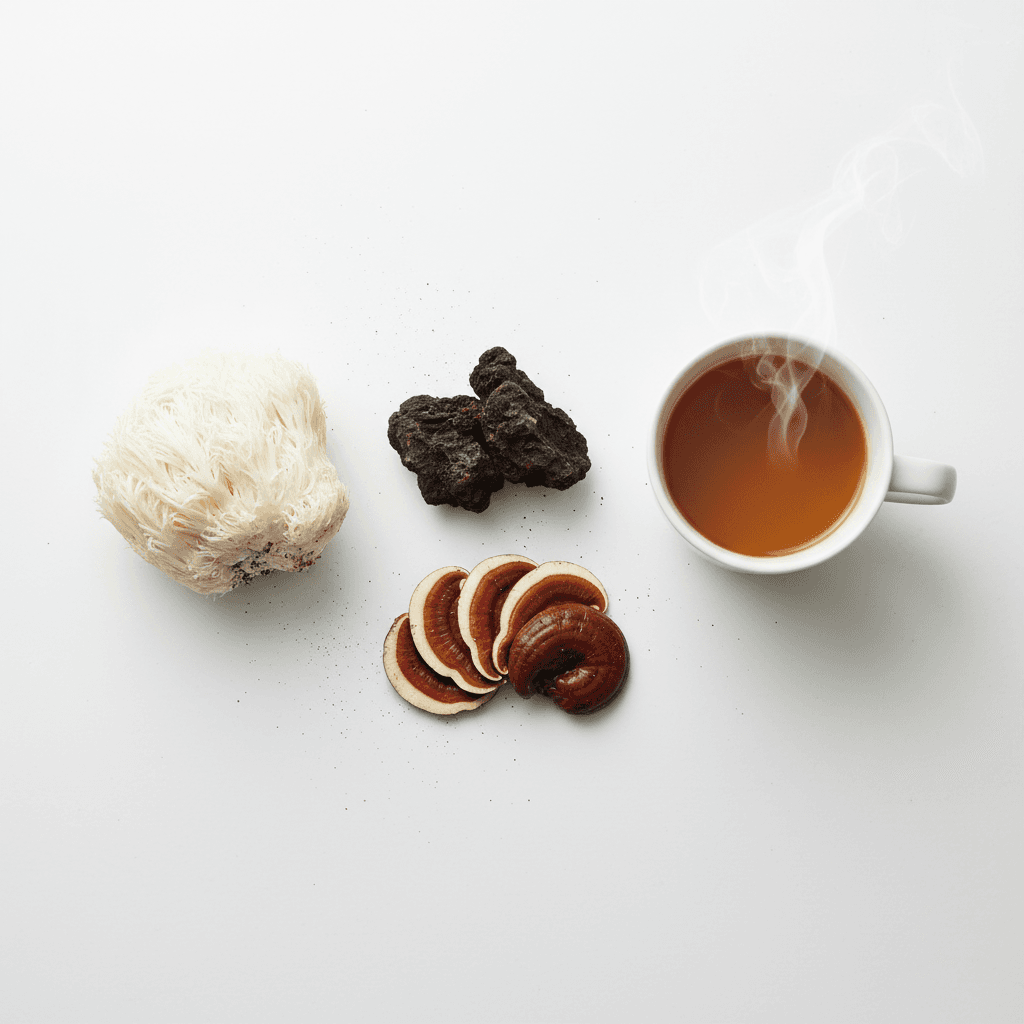
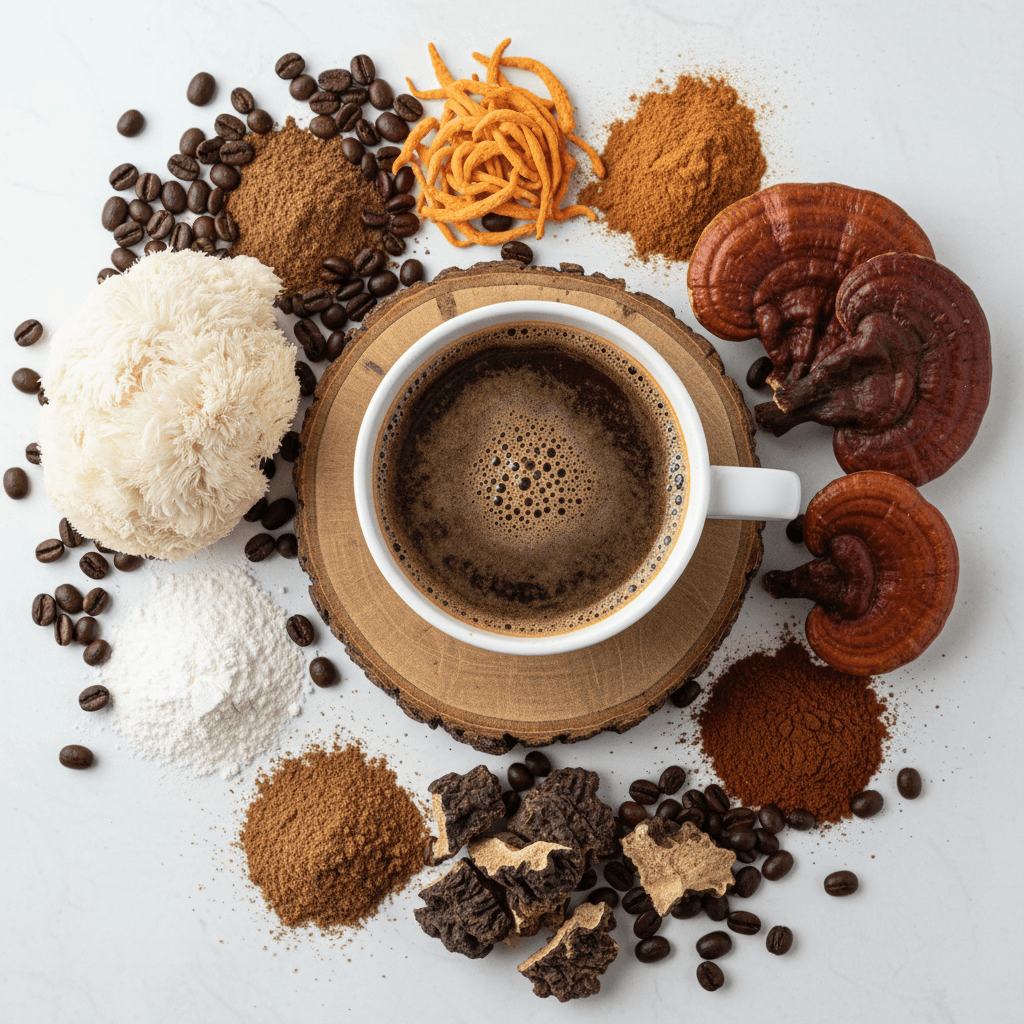
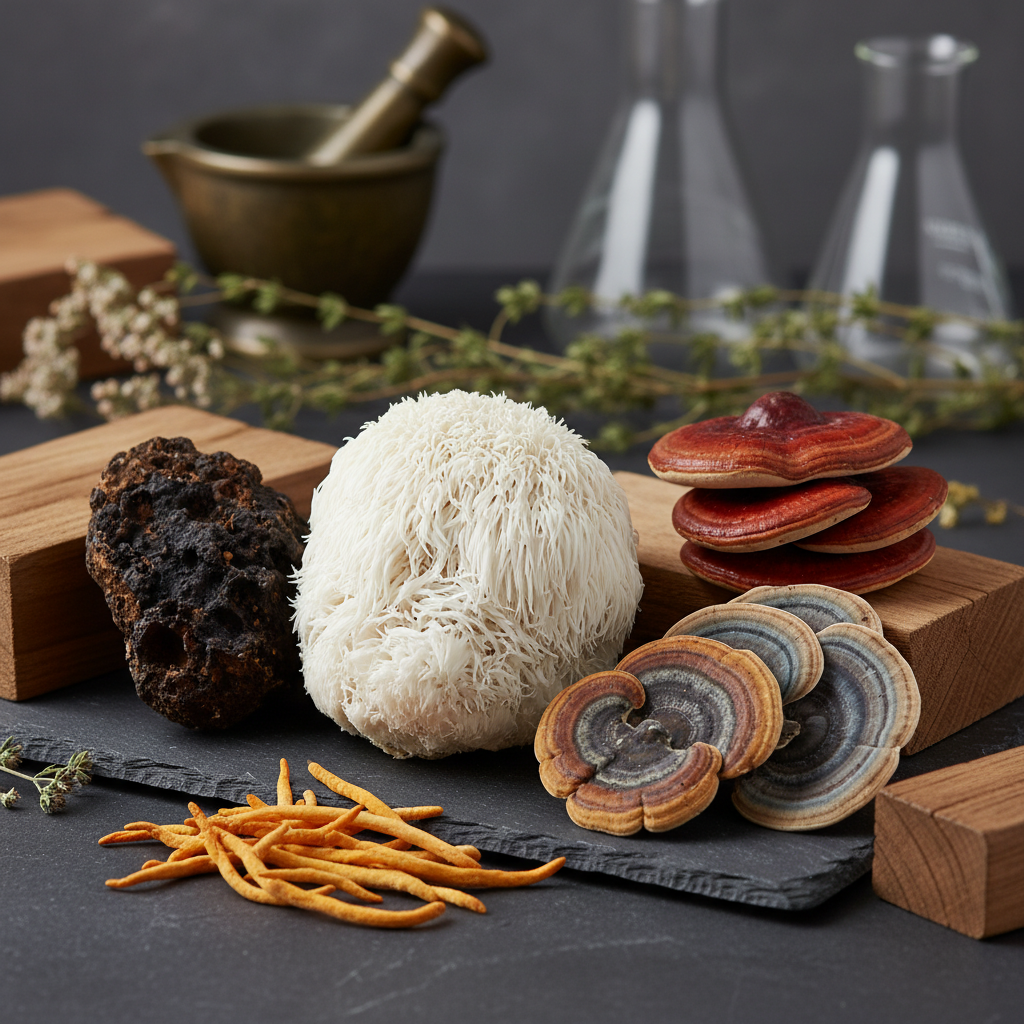
Mushroom coffee is regular coffee blended with extracts from functional mushrooms like Lion's Mane, Chaga, Reishi, Cordyceps, and Turkey Tail. These aren't culinary mushrooms (the kind you put on pizza) or psychedelic mushrooms—they're adaptogenic varieties that have been used in traditional medicine for centuries.
The result tastes like coffee, not mushrooms. Most people notice little to no flavour difference, though some describe subtle earthy or nutty undertones. The appeal is that you get your morning coffee ritual plus the potential benefits of functional mushrooms, typically with less caffeine than a standard cup.
A Brief History: From WWII Finland to Wellness Trend
Mushroom coffee isn't as new as it seems. During World War II, when coffee imports to Finland were cut off, Finns turned to Chaga mushrooms—which grow abundantly on birch trees in Nordic forests—as a coffee substitute. They'd brew Chaga into a dark, bitter beverage that satisfied the craving for their morning ritual.
The modern mushroom coffee movement started around 2012 when Finnish entrepreneur Tero Isokauppila founded Four Sigmatic, bringing traditional Nordic mushroom use to a global audience. By 2026, mushroom coffee has gone from niche biohacker curiosity to mainstream wellness product, with the global market projected to reach over $4 billion by 2030.
The Mushrooms: A Complete Guide
Not all mushroom coffees are created equal. Different mushrooms offer different properties, and understanding what's in your cup helps you choose the right product.
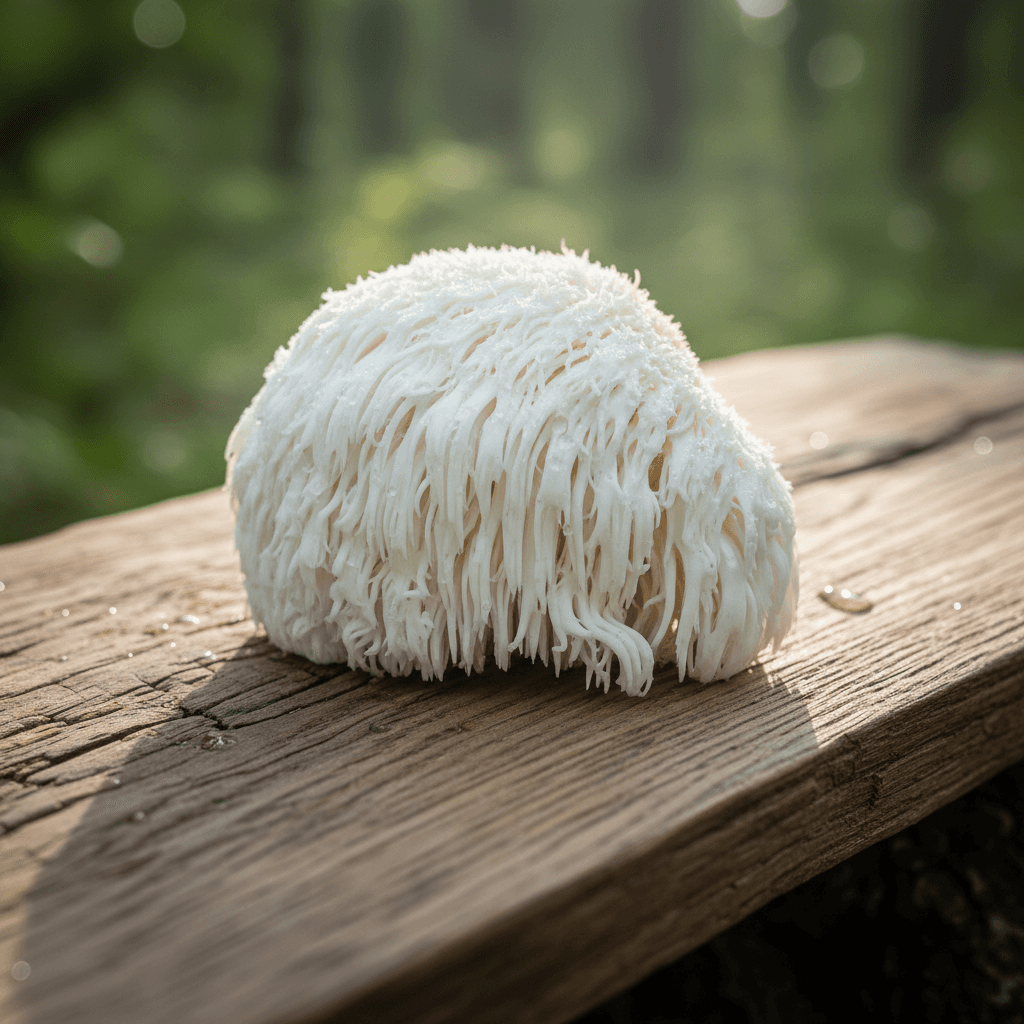
Lion's Mane (Hericium erinaceus)
Known for: Cognitive support and mental clarity
Lion's Mane is the "brain mushroom." It contains compounds called hericenones and erinacines that may stimulate the production of Nerve Growth Factor (NGF), which plays a role in maintaining and regenerating neurons.
A 2009 Japanese study found that adults who took Lion's Mane for 16 weeks showed improved cognitive function compared to a placebo group. More recent research from 2024 found it helped boost cognition and energy in older adults.
Flavour contribution: Mildly sweet with subtle umami notes
Best for: Students, knowledge workers, anyone seeking mental clarity
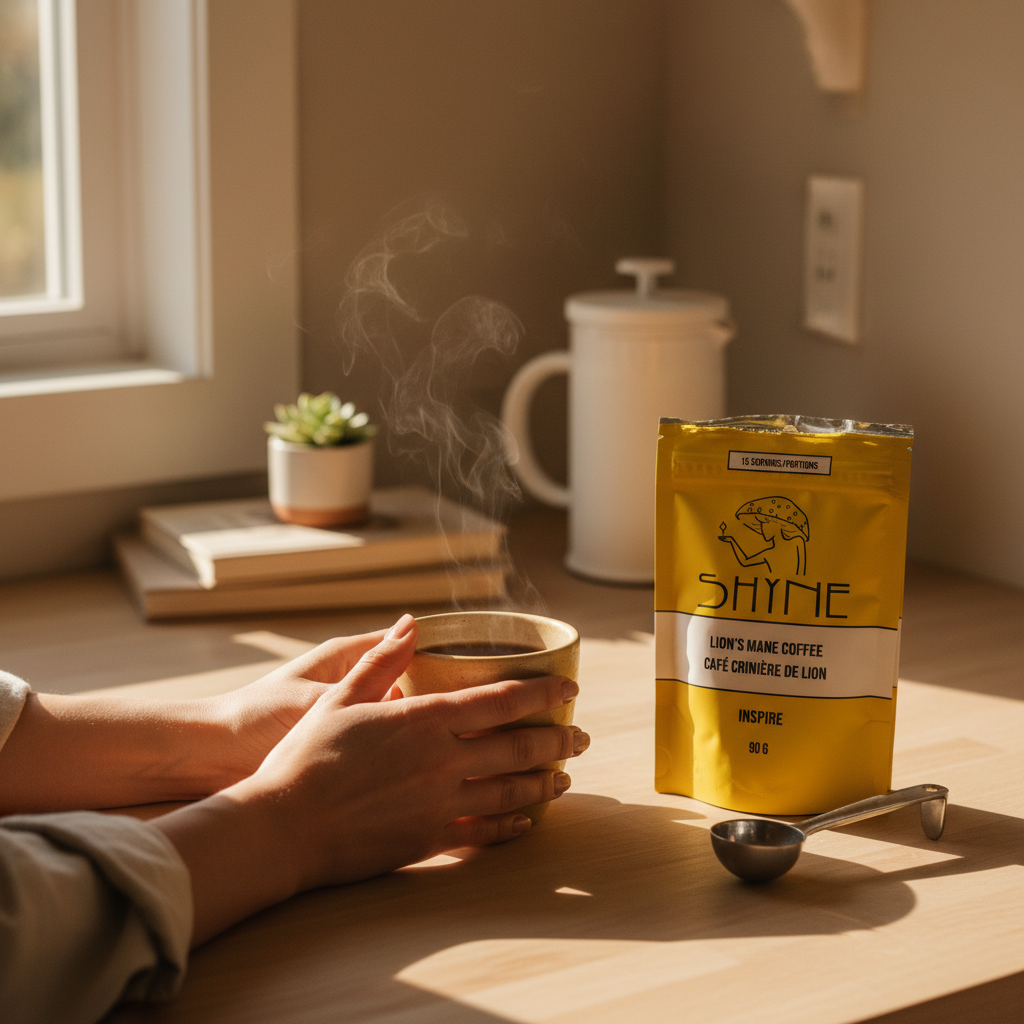
At Shyne, our Focus Blend features Lion's Mane.
Chaga (Inonotus obliquus)
Known for: Antioxidant power and immune support
Chaga grows on birch trees in cold climates and has one of the highest antioxidant concentrations of any food—approximately five times higher than other medicinal mushrooms. It's rich in polyphenols like betulin and melanin.
Beyond antioxidants, Chaga is known for supporting digestive health by promoting a balanced gut microbiome. In traditional Siberian and Northern European folk medicine, it was used as a general health tonic.
Flavour contribution: Smoky, vanilla-like notes with slight bitterness
Best for: Those seeking immune support and sustained energy
At Shyne, our Energy Blend features Chaga.
Turkey Tail (Trametes versicolor)
Known for: Gut health and immune modulation
Named for its colourful, fan-shaped appearance, Turkey Tail is one of the most researched medicinal mushrooms. It contains a compound called polysaccharide-K (PSK), which is actually an approved adjunct cancer treatment in Japan.
Turkey Tail is particularly valued for its prebiotic properties—it feeds beneficial gut bacteria. Since about 70% of immune cells reside in the gut, supporting digestive health has ripple effects throughout the body.
Flavour contribution: Rich and earthy with nutty undertones
Best for: Those focused on gut health, digestive balance, and immunity
At Shyne, our Balance Blend features Turkey Tail.
Reishi (Ganoderma lucidum)
Known for: Stress relief and relaxation
Called the "Mushroom of Immortality" in traditional Chinese medicine, Reishi has been used for over 2,000 years. It's prized for its adaptogenic qualities—helping the body adapt to stress and maintain balance.
Research suggests Reishi may help reduce fatigue, anxiety, and support better sleep. It's often recommended for evening consumption or for those dealing with high stress.
Flavour contribution: Deep, bitter, earthy taste
Best for: Stress management, evening relaxation, sleep support
Cordyceps (Cordyceps militaris)
Known for: Energy and athletic performance
Cordyceps gained fame after Chinese Olympic athletes credited it for their record-breaking performances in 1993. Research shows it may improve how the body uses oxygen and boost ATP production (cellular energy).
Unlike caffeine, which provides a quick spike followed by a crash, Cordyceps is said to offer sustained energy without jitters. It's popular among athletes and those seeking a midday boost.
Flavour contribution: Mildly nutty with a cereal-like quality
Best for: Athletes, active individuals, those seeking caffeine-free energy support
How Mushroom Coffee Is Made
Quality matters enormously in mushroom coffee, and understanding the production process helps you spot the good stuff.

Step 1: Harvesting
Functional mushrooms are either wild-harvested (like Chaga from birch forests) or cultivated under controlled conditions. The best products use the entire mushroom organism—both the fruiting body (the visible mushroom) and the mycelium (the underground network)—to capture the full spectrum of beneficial compounds.
Step 2: Extraction
Raw mushroom powder isn't very bioavailable—your body can't easily access the beneficial compounds. Quality producers use dual extraction (hot water and alcohol) to break down the cell walls and concentrate the active compounds like beta-glucans, triterpenes, and polysaccharides. This creates a concentrated essence rather than raw mushroom material.
Step 3: Drying and Powdering
The extract is spray-dried or freeze-dried into a fine powder that dissolves easily and has a long shelf life.
Step 4: Blending
The mushroom powder is combined with coffee—either instant coffee powder or mixed directly with ground coffee beans. Ratios vary, but quality products typically contain 250-500mg of mushroom extract per serving.
Why Full Spectrum Extraction Matters
The best mushroom coffee uses full spectrum extracts that capture compounds from both the fruiting body and mycelium. Here's why:
The fruiting body contains concentrated beta-glucans and triterpenes, while the mycelium produces unique enzymes and metabolites not found in the fruiting body. Full spectrum dual extraction captures the complete range of beneficial compounds from the entire organism, giving you the most comprehensive profile in every cup.
What Does Mushroom Coffee Taste Like?
The million-dollar question. Here's the honest answer:
It tastes like coffee. Not mushrooms, not dirt, not a forest floor.
Quality mushroom coffee has a smooth, slightly mellow flavour compared to regular coffee. You might notice:
- A subtle earthy undertone
- Slightly nutty notes
- Less bitterness and acidity than regular coffee
- A smooth, almost silky mouthfeel
The mushroom extracts actually help balance coffee's natural bitterness, which is why many people find mushroom coffee easier on the palate (and stomach) than straight black coffee.
That said, quality varies dramatically. Cheap products using raw mushroom powder instead of proper extracts can taste gritty and medicinal. This is why we recommend sticking to reputable brands that use extracted fruiting bodies.
For brand recommendations, see our guide to the best mushroom coffee in Canada.
Caffeine Content: The Numbers
One of the main draws of mushroom coffee is reduced caffeine. Here's how it compares:
| Beverage | Caffeine (mg) |
|---|---|
| Regular brewed coffee | 95-150mg |
| Mushroom coffee (typical) | 50-80mg |
| Shyne mushroom coffee | 65-75mg |
| Espresso (1 shot) | 63mg |
| Black tea | 40-70mg |
| Green tea | 25-50mg |
| MUD\WTR (coffee alternative) | 35mg |
Mushroom coffee typically contains about half the caffeine of regular coffee. This means:
- Less likelihood of jitters or anxiety
- Reduced impact on sleep if consumed later in the day
- Gentler on those sensitive to caffeine
- Still enough to provide alertness and focus
The adaptogens in functional mushrooms may also help smooth out caffeine's effects, reducing the spike-and-crash pattern many people experience with regular coffee.
Potential Benefits: What Research Suggests
Let's be clear upfront: most research on functional mushrooms has been conducted in test tubes or animals, not humans. While results are promising, we can't make definitive health claims. Here's what the science suggests:
Cognitive Support
Lion's Mane studies show potential for supporting memory, focus, and nerve regeneration. A 2024 analysis found cognitive and energy benefits in older adults.
Immune Function
Chaga, Turkey Tail, and Reishi all contain beta-glucans that may modulate immune response. Turkey Tail's PSK compound is actually used as a cancer treatment adjunct in Japan.
Energy and Endurance
Cordyceps may improve oxygen utilization and ATP production, potentially enhancing physical performance and reducing fatigue.
Stress Adaptation
Reishi and other adaptogens may help the body manage stress by regulating cortisol levels.
Gut Health
Turkey Tail's prebiotic properties may support beneficial gut bacteria, with downstream effects on immunity and overall wellness.
Antioxidant Activity
Chaga in particular has exceptional antioxidant properties, potentially helping protect cells from oxidative stress.
The Bottom Line: While the traditional use and preliminary research is promising, we need more human clinical trials to confirm these benefits. Think of mushroom coffee as a potentially beneficial addition to a healthy lifestyle—not a medicine or cure.
Side Effects and Safety: Who Should Be Cautious
Mushroom coffee is generally considered safe for most adults, but certain groups should exercise caution:
Who Should Avoid or Consult a Doctor First:
Pregnant or breastfeeding women
Limited research exists on functional mushrooms during pregnancy. Best to avoid or consult your healthcare provider.
People with mushroom allergies
If you're allergic to fungi, mushroom coffee could trigger a reaction.
Those on blood thinners
Some mushrooms (particularly Reishi) may have blood-thinning properties. Consult your doctor if you take anticoagulants.
People with autoimmune conditions
Immune-modulating mushrooms could potentially exacerbate autoimmune symptoms in some individuals.
Those with kidney problems
Mushrooms contain oxalates, which can contribute to kidney stones in susceptible individuals.
People taking immunosuppressants
The immune-stimulating effects could interfere with these medications.
Those with low blood pressure
Reishi may further lower blood pressure.
Common Side Effects
Most people experience no side effects. When they do occur, they're typically mild:
- Digestive discomfort (especially when starting out)
- Bloating (mushrooms contain chitin, a fibre some find hard to digest)
- Caffeine-related effects (jitters, sleep disruption) if sensitive to caffeine
Our advice: Start with half a serving to see how your body responds, then increase to a full serving if tolerated well.
How to Brew and Enjoy Mushroom Coffee
Instant Mushroom Coffee (Like Shyne)
The simplest method—just add hot water and stir.
- Add one serving (typically 1 scoop or packet) to your mug
- Pour 200-250ml of hot water (just off the boil)
- Stir until dissolved
- Add milk, creamer, or sweetener to taste
Pro tip: For a creamier texture, use a milk frother or blend briefly.
Ground Mushroom Coffee
If using ground mushroom coffee, brew it exactly like regular coffee using your preferred method:
Pour-over: Use a medium-fine grind, 195-205°F water, and let it bloom for 30 seconds before continuing to pour.
French press: Use a coarse grind, steep for 4 minutes, then press.
Drip machine: Follow your normal coffee-to-water ratio.
DIY Method
You can also add mushroom powder to your existing coffee:
- Add ½ to 1 teaspoon of mushroom extract powder to your grounds before brewing
- Or stir mushroom powder directly into your brewed coffee
Flavour Enhancers That Work Well
- Oat milk or coconut creamer
- A touch of maple syrup or honey
- Cinnamon or cardamom
- Cacao powder for a mocha twist
- MCT oil or coconut oil for a "bulletproof" version
Is Mushroom Coffee Right for You?
Consider Mushroom Coffee If You:
- Experience jitters, anxiety, or crashes from regular coffee
- Want to reduce caffeine intake without quitting coffee entirely
- Are interested in functional foods and adaptogens
- Have digestive sensitivity to regular coffee's acidity
- Want to support focus, energy, or immunity through your daily routine
- Enjoy trying new wellness products
Stick with Regular Coffee If You:
- Are happy with how regular coffee affects you
- Don't want to spend more per cup
- Prefer the simplicity of traditional coffee
- Have concerns about the lack of human clinical research
- Fall into one of the caution categories above
The Honest Take
Mushroom coffee isn't magic. It won't transform your health overnight. But for many people—especially those who don't tolerate regular coffee well—it offers a gentler, potentially more beneficial way to enjoy their morning ritual.
The best approach? Try it for yourself. Quality brands offer money-back guarantees (we offer 60 days), so there's little risk in experimenting.
Frequently Asked Questions
Does mushroom coffee taste like mushrooms?
No. Quality mushroom coffee tastes like smooth, slightly earthy coffee. The mushroom flavour is virtually undetectable.
Will mushroom coffee make me trip or feel high?
Absolutely not. Functional mushrooms like Lion's Mane and Chaga are completely different from psychedelic mushrooms. They have no psychoactive effects.
How much caffeine is in mushroom coffee?
Typically 50-80mg per cup—about half of regular coffee.
Can I drink mushroom coffee every day?
Yes. Most people drink it daily as a coffee replacement. Start with one cup and see how you feel.
When is the best time to drink mushroom coffee?
Morning or early afternoon, just like regular coffee. Due to the lower caffeine, some people find they can drink it later in the day without affecting sleep.
Is mushroom coffee safe during pregnancy?
There's limited research. Consult your healthcare provider before consuming during pregnancy or breastfeeding.
How long until I notice benefits?
Adaptogens typically work cumulatively. Most people report noticing effects after 1-2 weeks of consistent use.
Does mushroom coffee break a fast?
Black mushroom coffee contains minimal calories and is generally considered acceptable during intermittent fasting.
Ready to Try It?
If you're curious about mushroom coffee, the best way to learn is by trying it yourself.
At Shyne, we offer three targeted blends—Focus, Energy, and Balance—each featuring a single mushroom so you can choose based on your specific goals. All our products use dual-extracted mushrooms (mycelium + fruiting bodies), are made in Ontario, and come with a 60-day money-back guarantee.
Related Reading:
- Best Mushroom Coffee in Canada 2026
- Mushroom Coffee Myths Debunked
- Mushroom Coffee vs Supplements: Which Should You Choose?
- Is Mushroom Coffee Safe?
- The Complete Beginner's Guide to Mushroom Coffee
This article is for informational purposes only and is not intended as medical advice. Consult your healthcare provider before adding any supplement to your routine, especially if you have existing health conditions or take medications.