Nicole DiPietro
Co-Founder & Master Blender
Turkey Tail Mushroom and Gut Health: The Science of Prebiotic Power
Your gut contains trillions of bacteria—a complex ecosystem that influences everything from digestion to immunity to mood. Keeping this ecosystem balanced is one of the most important things you can do for your health. And one of the most promising natural tools for gut health might be growing on a fallen log in the forest near you.
Turkey Tail (Trametes versicolor) is one of the most researched medicinal mushrooms in the world, with over 400 published studies. While it's famous for immune support and cancer research, its effects on the gut microbiome may be equally significant—and more relevant to everyday health.
This guide explores what the science actually shows about Turkey Tail and gut health, how its prebiotic compounds work, and how to incorporate it into your wellness routine.
What Is Turkey Tail?
Turkey Tail gets its name from its appearance—colorful, fan-shaped brackets that grow on dead trees, resembling a wild turkey's tail feathers. It's found worldwide and has been used in traditional Chinese medicine for centuries, where it's known as Yun Zhi ("cloud mushroom").
Unlike culinary mushrooms, Turkey Tail is too tough and leathery to eat directly. Instead, it's consumed as a tea, powder, or extract to access its bioactive compounds.
What makes Turkey Tail special are two polysaccharide compounds found nowhere else in nature:
PSK (Polysaccharide-K or Krestin): Approved as a pharmaceutical cancer treatment in Japan since the 1970s, PSK is one of the most studied mushroom compounds in the world.
PSP (Polysaccharopeptide): Similar to PSK but with different sugar and protein compositions, PSP has been the focus of gut microbiome research.
Both compounds are beta-glucans—complex sugars that your digestive enzymes can't fully break down. This is actually key to how they work.
The Gut-Health Connection: Why It Matters
Before diving into Turkey Tail specifically, it's worth understanding why gut health is so important.
Your Gut Is an Immune Organ
70-80% of your immune cells reside in your gut. The gut-associated lymphoid tissue (GALT) constantly monitors what you eat, distinguishing between harmless food particles and potential threats. A healthy gut microbiome helps train this immune system to respond appropriately—active against pathogens, tolerant of beneficial substances.
The Microbiome Affects Everything
Research increasingly links gut bacteria to:
- Immune function: Balanced bacteria = balanced immune response
- Mental health: The gut-brain axis influences mood and cognition
- Inflammation: Dysbiosis (imbalanced bacteria) promotes systemic inflammation
- Nutrient absorption: Bacteria help break down food and synthesize vitamins
- Weight management: Microbiome composition affects metabolism and appetite signals
Prebiotics vs Probiotics
Probiotics are live beneficial bacteria you consume (like in yogurt or supplements).
Prebiotics are compounds that feed beneficial bacteria already in your gut, helping them thrive and outcompete harmful species.
Turkey Tail's polysaccharides act as prebiotics—they're not absorbed by your body but serve as fuel for beneficial gut bacteria.

How Turkey Tail Works as a Prebiotic
Turkey Tail's prebiotic mechanism is well-documented through both laboratory and human research.
The Journey Through Your Gut
When you consume Turkey Tail:
- Stomach: PSK and PSP pass through largely unchanged (your enzymes can't break them down)
- Small intestine: Still mostly intact
- Colon: Gut bacteria ferment these polysaccharides
- Result: Beneficial bacteria multiply, produce beneficial compounds
What Happens During Fermentation
When gut bacteria ferment Turkey Tail polysaccharides, they produce:
Short-Chain Fatty Acids (SCFAs): Including acetate, propionate, and butyrate. These acids:
- Nourish colon cells directly
- Support the mucus barrier that protects your gut lining
- Signal immune cells to maintain balance
- Lower gut pH, making the environment hostile to harmful bacteria
Increased Beneficial Bacteria: Studies show Turkey Tail consumption increases populations of:
- Bifidobacterium species
- Lactobacillus species (including L. acidophilus and L. rhamnosus)
Decreased Harmful Bacteria: Research shows reduced populations of:
- E. coli
- Shigella
- Other potentially pathogenic species
The Human Clinical Trial
A randomized clinical trial compared Turkey Tail PSP to the antibiotic amoxicillin in healthy volunteers over two months. The findings were striking:
Turkey Tail group showed:
- Clear, consistent microbiome improvements
- Increased beneficial bacteria populations
- Decreased harmful bacteria
- Effects consistent with prebiotic activity
Amoxicillin group showed:
- Disrupted microbiome (as expected from antibiotics)
- Decreased beneficial bacteria
- Less microbial diversity
This trial demonstrated that Turkey Tail doesn't just avoid harming your microbiome (like antibiotics do)—it actively improves it.
Beyond Gut Health: Immune System Effects
Turkey Tail's gut benefits are inseparable from its immune benefits. Here's why.
The Gut-Immune Connection
Since most immune cells reside in your gut, improving gut health naturally supports immune function. But Turkey Tail also has direct immune effects.
How Turkey Tail Modulates Immunity
Turkey Tail's polysaccharides interact with immune cells through specific receptors:
- Toll-like receptors (TLRs): Recognize Turkey Tail beta-glucans as "microbial patterns," activating innate immunity
- Dectin-1 receptors: Specifically recognize beta-glucans, enhancing macrophage and dendritic cell function
- Natural killer (NK) cells: Turkey Tail has been shown to increase NK cell activity
Importantly, Turkey Tail acts as an immunomodulator—not just an immune booster. This means it helps regulate immune response, potentially useful for both underactive immunity (susceptibility to infections) and overactive immunity (autoimmune tendencies).
Cancer Research Context
Turkey Tail's most dramatic research involves cancer patients. While we're not suggesting Turkey Tail treats cancer, the research demonstrates its immune effects:
Japanese Pharmaceutical Approval: PSK has been an approved adjuvant cancer therapy in Japan since the 1970s, with thousands of patients treated.
Clinical Trial Findings:
- Breast cancer patients recovered immune function faster after radiation when taking Turkey Tail
- Lung cancer patients showed improved immune function, body weight, and survival in multiple trials
- Colorectal cancer patients showed lower recurrence rates when PSK was added to chemotherapy
FDA-Approved Trials: The FDA has approved clinical trials combining Turkey Tail with conventional cancer treatments, including a $5.4 million NIH-funded collaboration.
These studies demonstrate Turkey Tail's profound effects on human immune function—effects that begin in the gut.
Who Should Consider Turkey Tail?
Based on the research, Turkey Tail may be particularly relevant for:
General Gut Health Support
Anyone looking to support their microbiome through natural means. Turkey Tail offers prebiotic benefits similar to fiber but through different mechanisms.
After Antibiotic Use
Antibiotics disrupt the gut microbiome—sometimes severely. Turkey Tail's prebiotic action may help restore beneficial bacteria populations after antibiotic treatment.
Immune System Support
Those seeking to support baseline immune function, particularly during cold and flu season or periods of stress.
Athletes and Active Individuals
Intense training can suppress immune function. Turkey Tail may help maintain immune resilience during heavy training periods.
Digestive Wellness
People with digestive concerns may benefit from Turkey Tail's gut-supporting effects, though anyone with specific conditions should consult their healthcare provider.
How to Use Turkey Tail
Forms Available
Tea: Traditional method. Dried Turkey Tail simmered for 1-2 hours. Mild, slightly earthy taste.
Powder: Ground dried mushroom or extract. Can be added to smoothies, coffee, or food.
Capsules: Convenient standardized doses of extract.
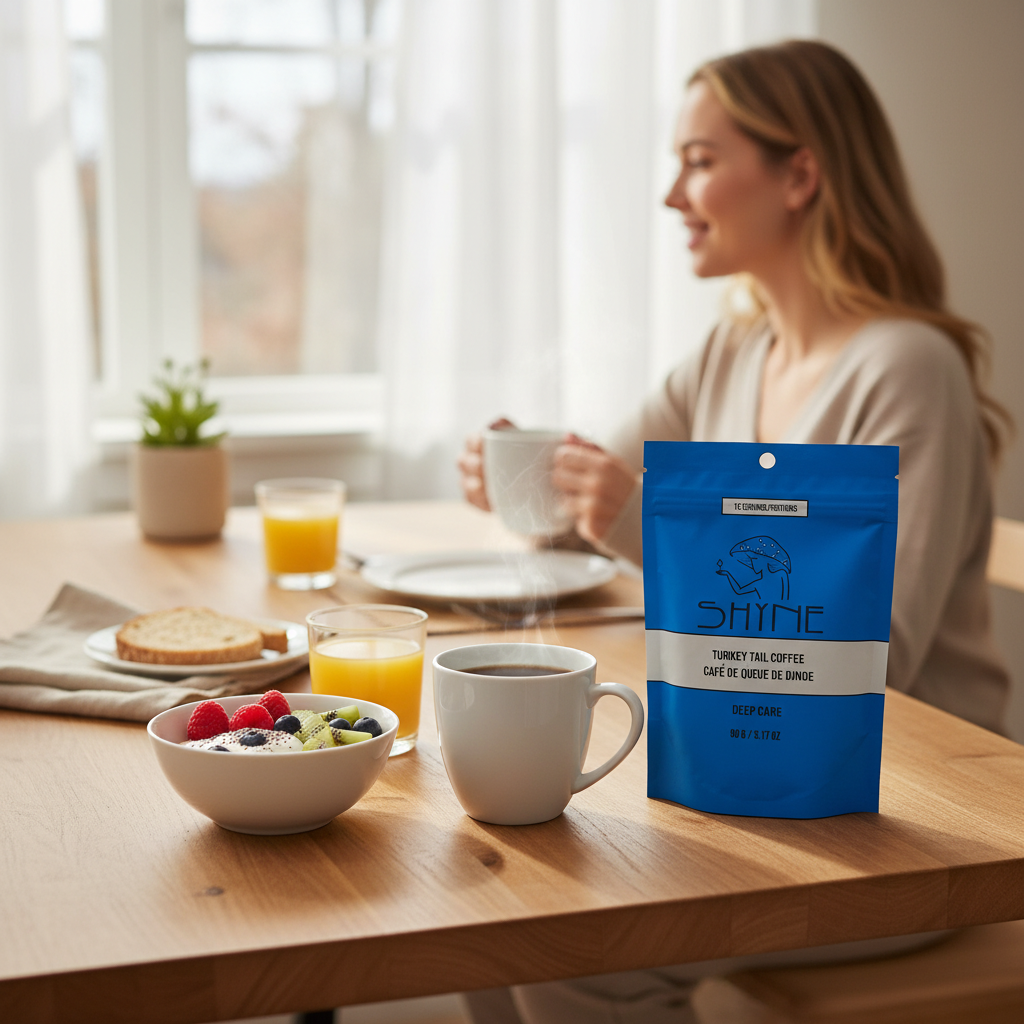
Mushroom Coffee: Turkey Tail extract blended with coffee for daily convenience.
Dosage Guidelines
Based on clinical research:
| Form | Typical Dose | Notes |
|---|---|---|
| Whole mushroom powder | 2-2.5g daily | 12+ weeks studied |
| PSK extract | 3g daily | Up to 36 months in trials |
| PSP extract | 1-3g daily | 8+ weeks for gut benefits |
| Combined extracts | 1-3g daily | Varies by product |
Our Balance Blend contains 500mg of Turkey Tail extract per serving. At 1-2 servings daily, this aligns with prebiotic research doses.

Important: Start with lower doses and increase gradually. Some people experience mild digestive adjustment as their microbiome shifts.
Timing
Turkey Tail can be taken any time of day. Many people prefer morning consumption with food to support absorption and minimize any digestive adjustment.
Duration
Prebiotic effects require consistent use. The human clinical trial showing microbiome benefits lasted 8 weeks. Plan for at least 4-8 weeks of daily use before evaluating effects.
Safety and Side Effects
Turkey Tail has an excellent safety profile, with decades of use in thousands of patients.
Generally Well Tolerated
Clinical trials consistently report Turkey Tail as well-tolerated. PSK has been safely used as an adjunct in cancer treatment since the mid-1970s, with a meta-analysis of 23 randomized controlled trials confirming safety.
Long-term use appears safe—studies show PSK/PSP have been consumed at 1g+ daily for up to 10 years in cancer patients without significant adverse effects.
Possible Side Effects
Reported side effects are generally mild:
- Digestive changes (gas, bloating) during initial use
- Darkened stools
- Darkened nail pigmentation (rare, with high doses)
- Occasional flu-like symptoms
Most side effects occur during the adjustment period as the microbiome shifts. Starting with lower doses and increasing gradually minimizes this.
Precautions
Diabetes medications: Turkey Tail may lower blood sugar. If you take diabetes medications, monitor blood sugar closely and consult your healthcare provider.
Bleeding disorders/blood thinners: Use cautiously if you have bleeding disorders or take anticoagulant medications.
Liver-metabolized drugs: PSP may affect how the liver processes certain medications. Consult your healthcare provider if you take prescription medications.
Pregnancy/breastfeeding: Insufficient safety data. Avoid use or consult your healthcare provider.
Mushroom allergies: Avoid if you have known allergies to mushrooms.
Immunotherapy patients: Turkey Tail's immune-stimulating effects may interfere with immunotherapy or be problematic for those on immunosuppressants.
Quality Considerations
Look for:
- Full spectrum extract: Look for products using both fruiting body and mycelium
- Standardized polysaccharide content: Quality products specify beta-glucan percentages
- Third-party testing: For contaminants and active compound verification
- Dual extraction: Captures both water and alcohol-soluble compounds
Turkey Tail vs Other Gut-Supporting Mushrooms
| Mushroom | Primary Gut Benefit | Best For |
|---|---|---|
| Turkey Tail | Prebiotic, microbiome modulation | Overall gut health, immune-gut connection |
| Lion's Mane | Gastric mucosa protection | Digestive comfort, gut-brain axis |
| Reishi | Anti-inflammatory, gut barrier | Stress-related digestive issues |
| Chaga | Antioxidant, anti-inflammatory | Gut inflammation, oxidative stress |
Turkey Tail stands out for its prebiotic mechanism—it directly feeds beneficial bacteria rather than working through other pathways.
The Bottom Line
Turkey Tail is one of the most evidence-backed functional mushrooms available, with particularly strong research supporting its gut health benefits. Its polysaccharides (PSK and PSP) act as prebiotics, feeding beneficial bacteria, increasing short-chain fatty acid production, and improving microbiome composition.
What the research shows:
- Clear prebiotic effects in human clinical trials
- Increased beneficial bacteria (Bifidobacterium, Lactobacillus)
- Decreased potentially harmful bacteria
- Immune-modulating effects that begin in the gut
- Excellent long-term safety profile
Who may benefit most:
- Anyone seeking natural gut health support
- Those recovering from antibiotic use
- People wanting to support baseline immune function
- Athletes maintaining immune resilience
- Those interested in the gut-immune connection
If you're looking to support your gut microbiome naturally, Turkey Tail offers one of the most researched options available. Its effects build over time with consistent use—making daily consumption through mushroom coffee an easy way to incorporate it into your routine.
Ready to support your gut health? Our Balance Blend combines 500mg of Turkey Tail extract with smooth Arabica coffee—prebiotic support in your daily cup.
FAQ
How long does it take for Turkey Tail to improve gut health?
Research suggests 4-8 weeks of consistent daily use for noticeable microbiome benefits. Some people notice digestive changes sooner, but prebiotic effects are cumulative.
Can I take Turkey Tail with probiotics?
Yes. Turkey Tail (prebiotic) and probiotics work synergistically—Turkey Tail feeds the beneficial bacteria, including any you're supplementing with.
Does Turkey Tail cause digestive upset?
Some people experience mild gas or bloating initially as their microbiome adjusts. This typically resolves within 1-2 weeks. Starting with lower doses helps minimize this.
Is Turkey Tail safe to take every day?
Yes. Clinical trials have safely used Turkey Tail extracts daily for years. It's generally considered safe for long-term use at recommended doses.
Can Turkey Tail help after taking antibiotics?
Research suggests it may help restore beneficial bacteria populations disrupted by antibiotics. The human clinical trial specifically compared Turkey Tail to antibiotic effects on the microbiome.
Related Reading:
- Mushroom Coffee and Gut Health
- Mushroom Coffee for Immune Support
- What Is Mushroom Coffee? Complete Guide
- Is Mushroom Coffee Safe?
This article is for informational purposes only and is not medical advice. Turkey Tail is a supplement, not a treatment for any disease. Consult your healthcare provider before use, especially if you take medications or have health conditions.