Nicole DiPietro
Co-Founder & Master Blender
Mushroom Coffee vs Matcha vs Yerba Mate: Which Caffeine Source Is Right for You?
If you're looking beyond regular coffee for your daily energy boost, you've probably come across three popular alternatives: mushroom coffee, matcha, and yerba mate. Each has passionate devotees who swear it's the superior choice.
But here's the truth: there's no universal "best." Each beverage offers distinct benefits, and the right choice depends on your body, your goals, and what you're actually looking for in a daily drink.
This guide breaks down the science behind each option so you can make an informed decision—or perhaps incorporate all three into your routine strategically.
The Quick Comparison
| Factor | Mushroom Coffee | Matcha | Yerba Mate |
|---|---|---|---|
| Caffeine per serving | 50-80 mg | 50-70 mg | 70-85 mg |
| Energy duration | 4-6 hours | 4-6 hours | 4-6 hours |
| L-theanine | Low/None | High | Low |
| Adaptogens | High | None | None |
| Theobromine | None | Low | Moderate |
| Taste | Coffee-like | Grassy, umami | Earthy, herbal |
| Prep complexity | Easy (instant) | Moderate | Easy-Moderate |
| Price per serving | $$-$$$ | $$-$$$ | $ |
Mushroom Coffee: The Adaptogenic Option
What It Is
Mushroom coffee combines regular coffee (or coffee alternatives) with extracts from functional mushrooms like Lion's Mane, Chaga, Reishi, and Cordyceps. The result is a beverage that tastes like coffee but with added adaptogenic benefits.
Caffeine Profile
Most mushroom coffee contains 50-80mg of caffeine per serving—about half to two-thirds of regular coffee. This lower caffeine combined with adaptogenic mushrooms creates a smoother energy experience for many people.
Unique Benefits
Adaptogenic Support
The functional mushrooms in mushroom coffee are adaptogens—compounds that help your body respond to stress more effectively. Rather than just masking fatigue with stimulants, adaptogens support your body's natural stress-response systems.
Cognitive Enhancement
Lion's Mane mushroom supports nerve growth factor (NGF) production, potentially benefiting memory, focus, and long-term brain health. This goes beyond what caffeine alone can offer.

Immune Support
Mushrooms like Chaga and Turkey Tail contain beta-glucans that support immune function—a benefit neither matcha nor yerba mate provides.
Gut Health
The beta-glucans in functional mushrooms also act as prebiotics, feeding beneficial gut bacteria.
Potential Downsides
- More expensive than regular coffee, matcha, or yerba mate
- Effects of adaptogenic mushrooms take time to build (2-4 weeks)
- Quality varies significantly between brands
- Less research on functional mushrooms compared to tea or coffee
Best For
- People who love coffee flavor but want less caffeine
- Those seeking stress adaptation and immune support
- Anyone experiencing jitters or anxiety from regular coffee
- People interested in cognitive support beyond caffeine
Matcha: The L-Theanine Powerhouse
What It Is
Matcha is finely ground powder made from specially grown green tea leaves. Unlike regular green tea where you steep and discard leaves, with matcha you consume the entire leaf, getting a more concentrated dose of its compounds.
Caffeine Profile
A typical serving contains 50-70mg of caffeine—similar to mushroom coffee. However, matcha's caffeine is released more gradually due to L-theanine and the fiber content of the powdered leaves.
Unique Benefits
L-Theanine: The Game Changer
L-theanine is an amino acid found almost exclusively in tea, and matcha has the highest concentration of any tea. This compound:
- Promotes alpha brain waves associated with calm focus
- Increases GABA, serotonin, and dopamine production
- Blocks cortisol (stress hormone)
- Synergizes with caffeine for "calm alertness"
Studies show that L-theanine combined with caffeine improves cognitive performance and attention more than caffeine alone. This is why matcha devotees describe its energy as "focused" rather than "wired."
Exceptional Antioxidants
Matcha contains extremely high levels of EGCG (epigallocatechin gallate), one of the most potent antioxidants known. One cup of matcha has the antioxidant equivalent of roughly 10 cups of regular green tea.
Sustained Energy Release
The combination of caffeine, L-theanine, and fiber creates a 4-6 hour sustained energy curve without the spike-and-crash pattern of coffee. Many people report no afternoon crash at all.
Potential Downsides
- Distinct grassy, umami taste that not everyone enjoys
- Quality matcha is expensive
- Contains lead (tea plants absorb it from soil)—ceremonial grade from Japan is safer
- Requires some preparation technique for best results
- No adaptogenic or immune benefits
Best For
- People who want calm, focused energy without jitters
- Those sensitive to caffeine's anxiety-inducing effects
- Anyone who enjoys the ritual of preparation
- People seeking high antioxidant intake
Yerba Mate: The Balanced Stimulant
What It Is
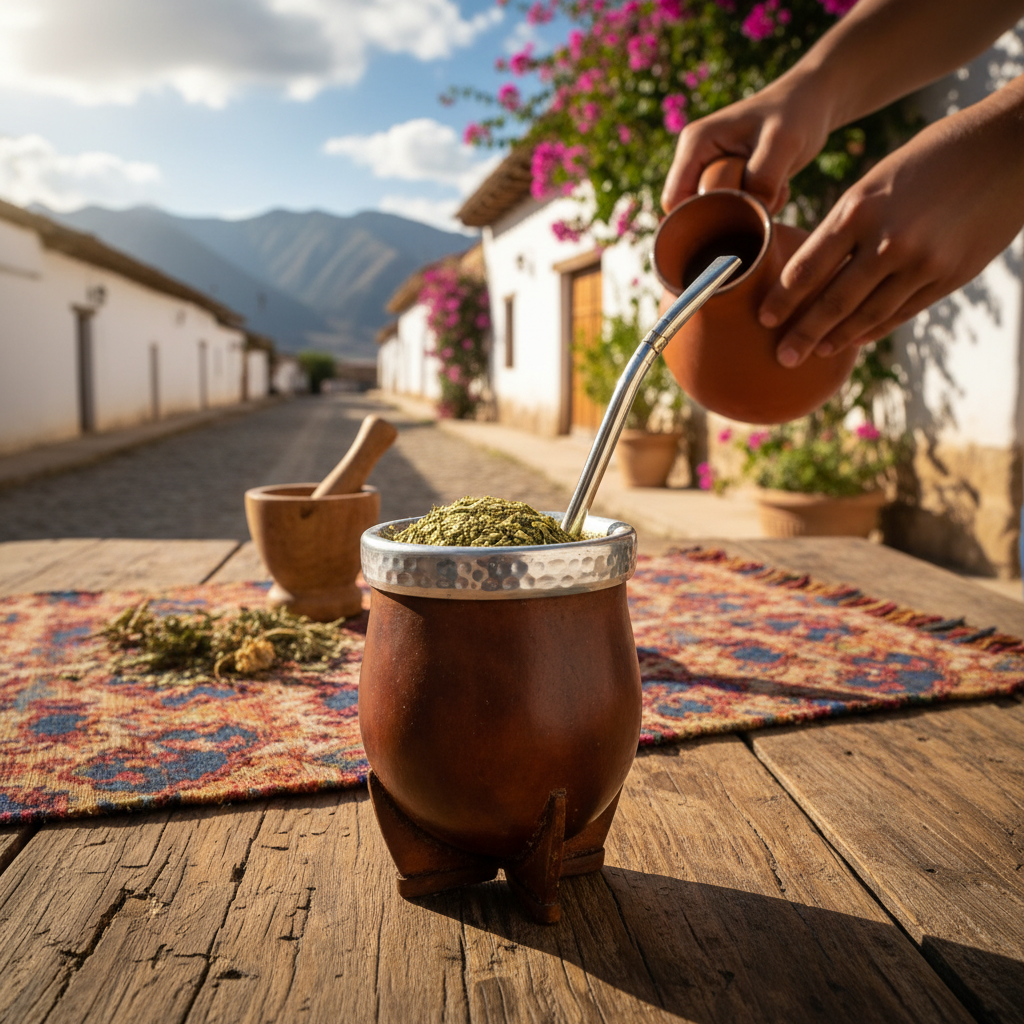
Yerba mate is a traditional South American beverage made from the leaves of the Ilex paraguariensis plant. It's been consumed for centuries in Argentina, Uruguay, Paraguay, and southern Brazil.
Caffeine Profile
Yerba mate contains 70-85mg of caffeine per serving—slightly more than mushroom coffee or matcha, but less than regular coffee. However, its stimulant profile is unique.
Unique Benefits
The Theobromine Factor
Unlike coffee or matcha, yerba mate contains significant amounts of theobromine (also found in chocolate) and theophylline. These compounds:
- Provide milder, longer-lasting stimulation than caffeine
- Act as vasodilators (improve blood flow)
- Create a smoother energy experience
- May explain why mate feels "different" than coffee
This combination of caffeine + theobromine + theophylline is often described as providing energy that's simultaneously stimulating and soothing—you feel alert but not wired.
Nutrient Dense
Yerba mate is remarkably nutrient-rich, containing:
- Vitamins A, B1, B2, B3, B5, B6, C, and E
- Minerals: magnesium, zinc, copper, iron, manganese
- Significant antioxidant content
Drinking about one liter of yerba mate daily could cover your body's daily requirement for many of these minerals.
Cardiovascular and Metabolic Benefits
Research suggests yerba mate consumption may help:
- Reduce cardiovascular risk factors
- Support healthy cholesterol levels
- Improve insulin sensitivity
- Aid fat metabolism
Gentle on Digestion
Many people who experience acid reflux or digestive issues with coffee find yerba mate much easier to tolerate.
Potential Downsides
- Strong, earthy taste that takes getting used to
- Hot yerba mate consumption has been linked to increased esophageal cancer risk (let it cool slightly)
- Traditional preparation (gourd and bombilla) has a learning curve
- No L-theanine or adaptogenic benefits
- May interact with certain medications
Best For
- People who want more caffeine than matcha/mushroom coffee but smoother than regular coffee
- Those seeking a nutrient-dense caffeinated beverage
- Anyone with digestive sensitivity to coffee
- People interested in traditional, social drinking rituals
How They Compare: Deep Dive
Energy Quality
Mushroom Coffee: Smooth, sustained energy with adaptogenic stress support. The lower caffeine combined with adaptogens creates balanced alertness. Effects build over weeks of consistent use.
Matcha: Calm, focused energy from the L-theanine + caffeine synergy. Often described as "alert but peaceful." Immediate effects plus cumulative benefits from antioxidants.
Yerba Mate: Energizing yet grounding, thanks to the theobromine/theophylline combo. More stimulating than matcha but without coffee's edge. Immediate effects.
Stress and Anxiety
Best choice: Tie between Mushroom Coffee and Matcha
Mushroom coffee's adaptogens (especially Reishi) help regulate stress hormones over time. Matcha's L-theanine directly promotes calm and blocks cortisol. Both are excellent choices for anxiety-prone individuals.
Yerba mate, while smoother than coffee, doesn't have specific anti-anxiety compounds.
Cognitive Function
Best choice: Mushroom Coffee (long-term) / Matcha (immediate)
For immediate focus, matcha's L-theanine + caffeine combination is well-studied and effective. For long-term cognitive support, Lion's Mane in mushroom coffee may offer unique benefits for brain health and neuroplasticity.
Yerba mate provides standard caffeine-based alertness without additional cognitive compounds.
Immune Support
Best choice: Mushroom Coffee
No contest here. The beta-glucans in functional mushrooms like Chaga, Reishi, and Turkey Tail provide immune-modulating benefits that neither matcha nor yerba mate offers.
Antioxidants
Best choice: Matcha
Matcha's EGCG content is exceptionally high. While mushroom coffee and yerba mate both contain antioxidants, matcha is in a different league for antioxidant density.
Digestive Friendliness
Best choice: Yerba Mate or Mushroom Coffee
Both are generally easier on the stomach than regular coffee. Matcha can cause nausea in some people if consumed on an empty stomach.
Value for Money
Best choice: Yerba Mate
Quality yerba mate is significantly cheaper per serving than ceremonial-grade matcha or mushroom coffee. It's the most economical option for daily use.
Can You Combine Them?
Absolutely. Many people rotate between these beverages based on their needs:
- Morning focused work: Matcha for calm alertness
- Afternoon energy: Mushroom coffee for sustained energy without sleep disruption
- Social occasions: Yerba mate for the ritual and conversation
- High-stress periods: Mushroom coffee for adaptogenic support
- Pre-workout: Yerba mate for the energizing theobromine
Some brands even combine them—mushroom matcha lattes, for example, offer the benefits of both L-theanine and adaptogenic mushrooms.
Frequently Asked Questions
Which has the least caffeine?
Matcha and mushroom coffee are similar (50-80mg), both lower than yerba mate (70-85mg) and much lower than regular coffee (95-200mg).
Which tastes most like coffee?
Mushroom coffee, by far. It's made with actual coffee beans. Matcha is grassy/vegetal, and yerba mate is earthy/herbal.
Which is best for anxiety?
Matcha (L-theanine) or mushroom coffee with Reishi (adaptogenic). Avoid yerba mate's higher caffeine if you're very sensitive.
Can I drink these while pregnant?
Consult your healthcare provider. All contain caffeine, and functional mushrooms lack safety data during pregnancy. Many practitioners suggest limiting caffeine to under 200mg daily during pregnancy.
Which is best for weight loss?
All three may support metabolism, but yerba mate has the most research specifically on fat oxidation. However, the differences are modest—none is a magic weight loss solution.
The Bottom Line
There's no single "best" choice—only the best choice for you:
Choose Mushroom Coffee if you want coffee flavor with less caffeine, adaptogenic stress support, immune benefits, and cognitive enhancement from Lion's Mane.
Choose Matcha if you want calm, focused energy from L-theanine, exceptional antioxidants, and don't mind the taste or preparation ritual.
Choose Yerba Mate if you want slightly more caffeine with smooth delivery, nutrient density, affordability, and gentle digestion.
Or choose all three strategically. Your morning routine doesn't have to be monotonous—and rotating between these beverages lets you enjoy the unique benefits of each.
Related Reading: