Nicole DiPietro
Co-Founder & Master Blender
Sustainable and Ethical Mushroom Coffee: What to Look For
As consumers become more conscious about environmental and social impact, questions arise about the sustainability and ethics of our purchases—including mushroom coffee. Is your morning cup good for you AND good for the planet?
Let's explore what makes mushroom coffee sustainable (or not) and how to make more responsible choices.
Why Sustainability Matters in Mushroom Coffee
The Environmental Context
Coffee production already has significant environmental impact:
- Deforestation: Coffee farming is a leading cause of deforestation in tropical regions
- Water use: It takes roughly 140 liters of water to produce one cup of coffee
- Pesticides: Conventional coffee is among the most chemically treated crops
- Carbon footprint: Transport from tropical growing regions adds emissions
When you add mushrooms to the equation, you're doubling the supply chain complexity. This creates both challenges and opportunities.
The Opportunity
The good news: mushrooms can be grown more sustainably than many crops:
- Can be cultivated on agricultural waste
- Don't require arable land
- Can be grown locally (reducing transport)
- Use relatively little water
- Don't require pesticides
The key is whether companies are capitalizing on these opportunities or not.
Coffee Sourcing: What to Look For
Certifications That Matter
Organic Certification:
- No synthetic pesticides or fertilizers
- Better for soil health
- Reduced chemical runoff
- Better for farmworkers
- Farmers receive fair prices
- Community development funds
- Labor standards protected
- Environmental standards included
- Biodiversity conservation
- Worker welfare standards
- Farm sustainability requirements
- Climate-smart agriculture
Bird Friendly:
- Shade-grown requirements
- Habitat preservation
- No clear-cutting
Beyond Certifications
Direct trade relationships:
- Some companies work directly with farms
- Can ensure standards beyond certifications
- Often means better quality too
Origin transparency:
- Companies that tell you where coffee comes from
- Single-origin vs. blends from known sources
- Traceability throughout supply chain
Red Flags
- No information about coffee sourcing
- "Premium" claims without specifics
- Extremely low prices (someone is being squeezed)
- No certifications AND no explanation of practices
Mushroom Sourcing: The Wild vs. Cultivated Question
Wild-Harvested Mushrooms
Chaga is typically wild-harvested:
- Grows on birch trees in cold climates
- Takes 15-20 years to mature
- Overharvesting is becoming a concern
- Quality wild sources are limited
Sustainability concerns:
- Population decline in some areas
- Unregulated harvesting
- Damage to host trees
- Long regeneration time
What to look for:
- Companies that source from sustainable, managed forests
- Certifications like FSC (Forest Stewardship Council) for forest products
- Transparency about harvest regions
- Companies investing in sustainability
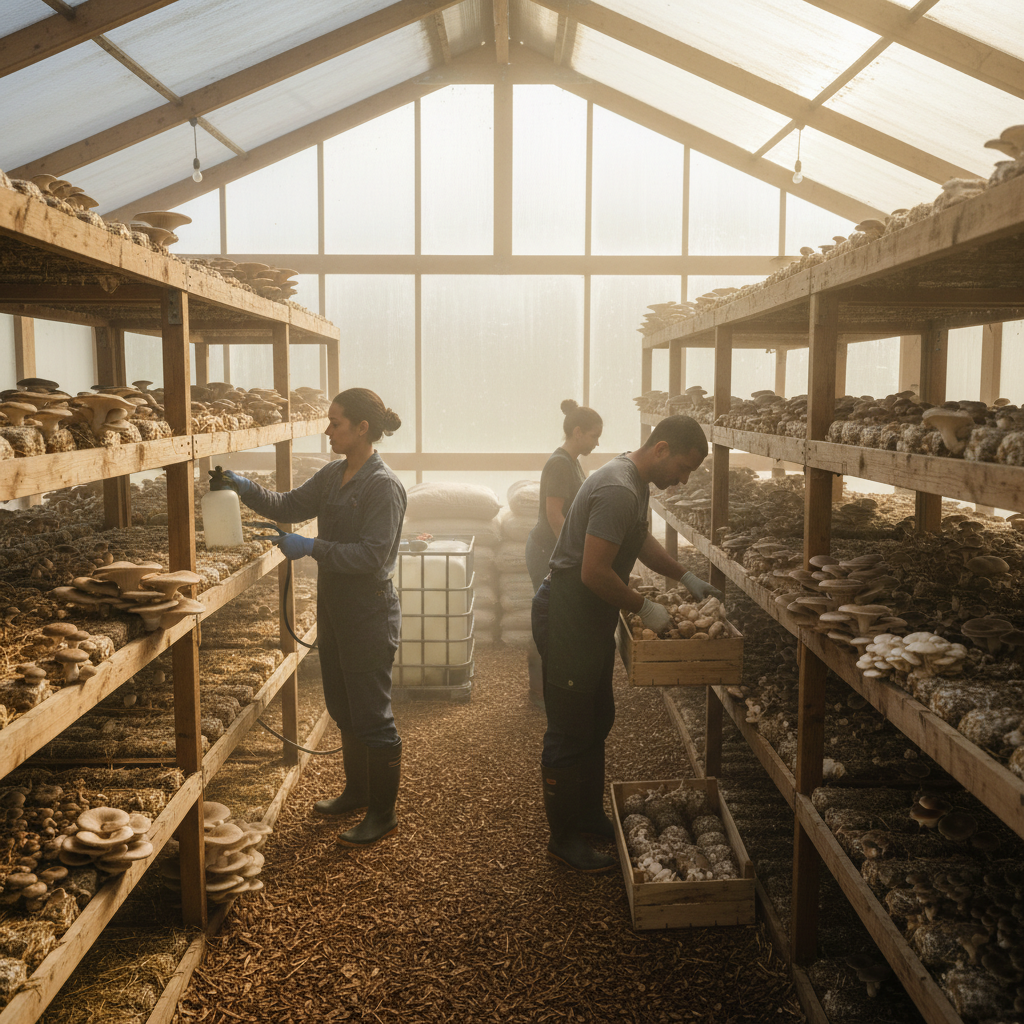
Cultivated Mushrooms
Lion's Mane, Reishi, Cordyceps, Turkey Tail can all be cultivated:
- Grown on agricultural byproducts (sawdust, rice hulls)
- Controlled environment
- Consistent quality
- Potentially local production
Sustainability advantages:
- No wild ecosystem impact
- Use of waste materials
- Year-round production
- Can be done anywhere
What to look for:
- Grown on organic substrates
- Energy-efficient facilities
- Local production when possible
- Waste/substrate reuse programs
Packaging and Waste
The Problem
Coffee packaging is notoriously wasteful:
- Foil-lined bags (not recyclable)
- Single-use packets
- Plastic containers
- Excessive secondary packaging
Better Options
Compostable packaging:
- Made from plant-based materials
- Can be composted at home or industrially
- Breaking down naturally
Recyclable packaging:
- Aluminum (highly recyclable)
- Cardboard (widely recyclable)
- Glass (infinitely recyclable)
Minimal packaging:
- Less is more
- Avoid brands with excessive packaging
- Bulk options reduce per-serving waste
Refill programs:
- Some brands offer refill pouches
- Reuse container, replace contents
- Reduces packaging significantly
What to Ask
- Is this packaging recyclable in my area?
- Are there refill or bulk options?
- What is the packaging made from?
- Does the company have a packaging reduction plan?

Carbon Footprint Considerations
Where Emissions Come From
Coffee portion:
- Farm operations
- Processing
- International shipping
- Roasting
Mushroom portion:
- Cultivation or harvesting
- Processing and extraction
- Transport
Your portion:
- Brewing method (electricity/gas)
- Milk/cream (dairy has significant footprint)
- Disposal of grounds
Reducing Impact
Choose local when possible:
- Canadian-based mushroom coffee reduces transport
- Local mushroom cultivation exists in BC and Ontario
- Coffee will always come from tropical regions, but mushrooms don't have to
Consider brewing method:
- French press and pour-over: Lower energy than machines
- Avoid single-use pods when possible
- Use energy-efficient appliances
Compost grounds:
- Coffee grounds are excellent compost
- Mushroom extracts won't affect composting
- Diverts waste from landfill
Labor and Ethics
Coffee Industry Challenges
The coffee industry has documented issues:
- Low farmer incomes
- Child labor in some regions
- Dangerous pesticide exposure
- Lack of labor protections
What to Look For
Fair Trade certification: Ensures minimum prices and labor standards
Direct relationships: Companies that know and work with their farmers
Transparency: Brands willing to discuss their supply chain
Living wage commitments: Some companies go beyond minimum standards
Mushroom Industry
The mushroom industry is newer but growing:
- Most functional mushroom cultivation is in Asia
- Labor practices vary by country and company
- Less visibility into supply chains than coffee
Questions to ask:
- Where are the mushrooms grown/harvested?
- What are labor conditions like?
- Does the company audit their suppliers?
Questions to Ask Brands
About Coffee
- Where is your coffee sourced?
- What certifications do you have?
- How do you ensure farmer welfare?
- Is your coffee organic?
About Mushrooms
- Are your mushrooms wild-harvested or cultivated?
- Where are they grown/harvested?
- What is the substrate/growing medium?
- How do you ensure sustainable harvesting (for wild)?
About Packaging and Operations
- What is your packaging made from?
- Is it recyclable/compostable?
- Do you have carbon reduction goals?
- Do you offer refill or bulk options?
About Transparency
- Can you trace your ingredients to source?
- Do you publish sustainability reports?
- What certifications do you have?
- How do you verify your suppliers?
Certifications Quick Reference
| Certification | What It Covers |
|---|---|
| USDA Organic / Canada Organic | No synthetic inputs |
| Fair Trade | Farmer prices, labor standards |
| Rainforest Alliance | Environment + social |
| B Corp | Overall company ethics |
| Non-GMO Project | No genetic modification |
| FSC | Sustainable forestry |
Making Better Choices
The Hierarchy of Impact
Highest impact choices:
- Choose certified organic and fair trade coffee
- Choose cultivated mushrooms from responsible sources
- Choose companies with transparent sourcing
- Choose minimal/recyclable packaging
- Buy from companies with stated sustainability goals
Additional actions:
- Compost coffee grounds
- Use reusable cups when possible
- Consider carbon offset programs
- Support companies investing in sustainability
The Imperfect Reality
No product is perfectly sustainable. Every choice involves tradeoffs:
- Organic certification is expensive (small farms may not afford it)
- Fair trade has critics and limitations
- Even good packaging ends up in landfill sometimes
- Transport emissions are unavoidable for coffee
Progress over perfection: Make better choices when you can, don't stress about being perfect.
Shyne Coffee's Approach
We're transparent about our approach:
Coffee sourcing:
- We work with organic, fair trade certified coffee suppliers
- Our beans are sustainably sourced from known regions
- We prioritize quality and ethics equally
Mushroom sourcing:
- Our mushroom extracts come from established, quality suppliers
- We use full spectrum dual-extracted mushroom extracts (higher quality, lower waste)
- We're working toward greater supply chain transparency
Packaging:
- We're transitioning to more sustainable packaging
- We offer subscription options that reduce shipping waste
- We're exploring refill programs
Ongoing:
- Sustainability is a journey, not a destination
- We're committed to improvement
- We welcome questions about our practices
Frequently Asked Questions
Is mushroom coffee more or less sustainable than regular coffee?
It depends on the specific product. The mushroom component can be quite sustainable if cultivated responsibly. Combined with responsible coffee sourcing, mushroom coffee can be a reasonably sustainable choice—potentially better than conventional coffee.
Are wild-harvested mushrooms bad?
Not inherently, but sustainability depends on harvesting practices. Well-managed wild harvesting can be sustainable. Overharvesting and habitat damage are concerns with some suppliers.
Does organic mushroom coffee exist?
Yes. Look for products with organic coffee AND mushrooms grown on organic substrates. Full organic certification is possible.
How can I verify a company's claims?
Look for third-party certifications (not just self-claims). Check if they publish detailed sourcing information. See if they respond to direct questions. Research their reputation.
Is local always better?
For mushrooms, often yes—less transport, fresher product, supports local economy. For coffee, "local" doesn't exist (it doesn't grow in Canada), but responsible sourcing matters regardless of distance.
The Bottom Line
Sustainable and ethical mushroom coffee is possible—but requires some homework. Look for:
- Certified organic and fair trade coffee
- Responsibly sourced mushrooms (cultivated or sustainably wild-harvested)
- Transparent companies willing to discuss their practices
- Thoughtful packaging with recycling or composting options
- Companies with sustainability commitments
Your daily coffee habit can align with your values. The options exist—you just need to seek them out.
Learn more about our approach: Visit our About page to learn about Shyne's commitment to quality, sustainability, and Canadian values. Have questions about our sourcing? Contact us—we're happy to discuss.
Related Reading: